
COMPLIANCE
E-INVOICING
INTEGRATION
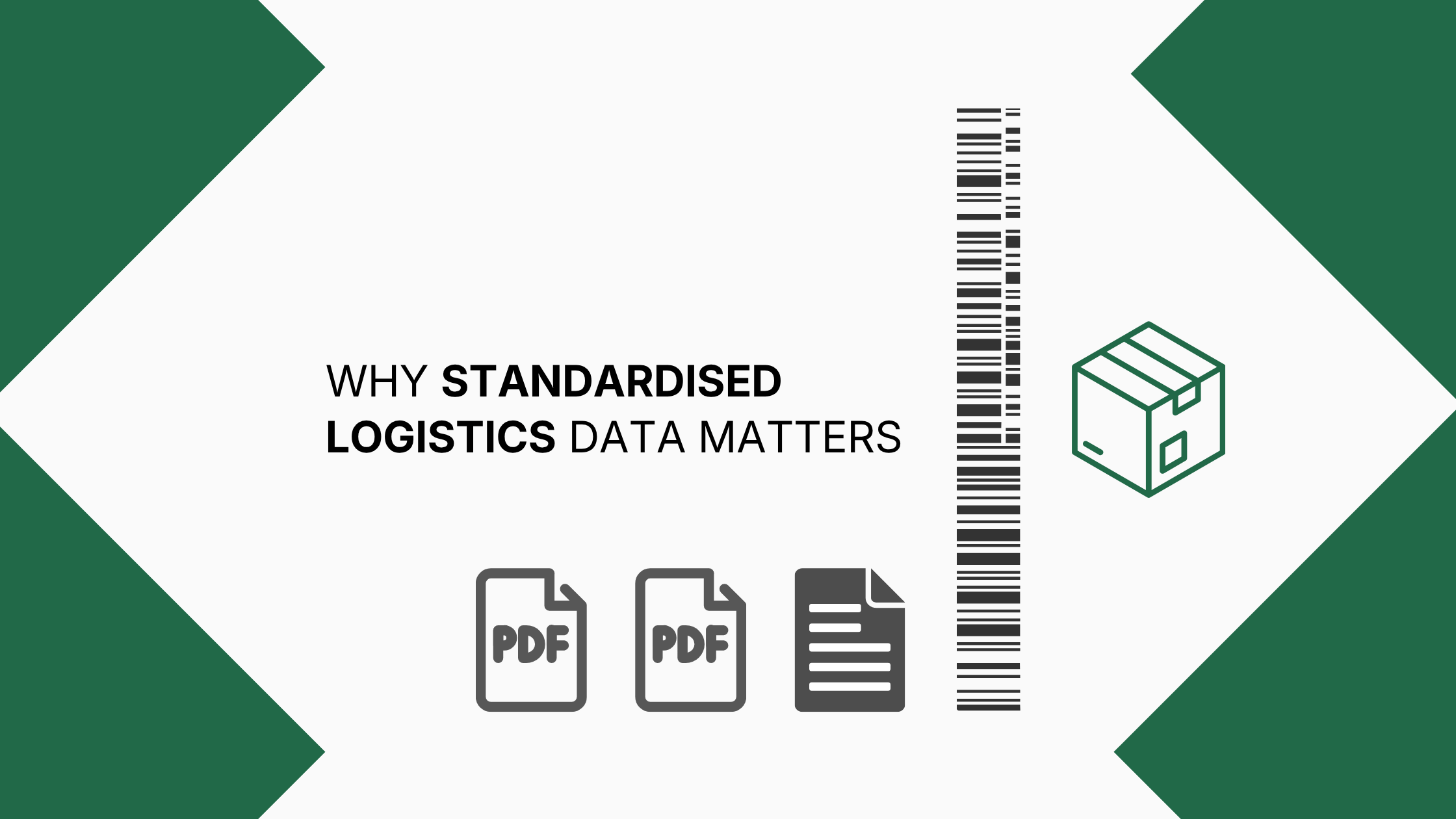

In wholesale, operational problems do not always start inside the invoice.
Very often, they start much earlier, at goods receipt, pallet handling, warehouse scanning, and shipment matching. That is why EDI in wholesale is not only about orders and invoices. It is also about how physical logistics units are identified and linked to the right digital information.
This is where SSCC labels matter.
According to GS1, the Serial Shipping Container Code (SSCC) is used to identify a logistic unit such as a case, pallet, or parcel. It is typically represented in a barcode on a GS1 Logistics Label, giving each logistics unit a unique identity that can be tracked through the supply chain.
An SSCC label is not just a barcode sticker.
In practice, it is the physical identifier that helps warehouses, retailers, distributors, and logistics providers recognise exactly which pallet or shipment unit they are handling. GS1 US describes the SSCC as an 18-digit identifier that acts like a license plate for a logistics unit, and notes that it is commonly encoded in a GS1-128 barcode on a logistics label.
That is what makes it so important in wholesale operations.
When a business receives a pallet with an SSCC label, the label should connect directly to the structured data already exchanged between partners. That may include the despatch advice, shipment information, order references, product contents, and receiving expectations. If that link is weak, scanning becomes less useful and exceptions become more common.
Wholesale depends on volume, repeatability, and speed.
When products move across suppliers, distribution centres, retailers, and transport partners, businesses need a standard way to identify logistics units without relying on manual interpretation. GS1’s logistics label guidance exists for exactly this reason: to make physical identification of logistics units easier and more consistent across complex logistics flows.
For enterprise teams, that creates a simple reality.
An SSCC label only delivers real value when it is supported by the right data flow behind it. A barcode can be scanned in a warehouse in seconds, but the operation only stays efficient if the surrounding document exchange is also structured, validated, and aligned.
That is where EDI becomes essential.
Many companies treat labels as a warehouse issue and EDI as a back-office issue.
In reality, they are deeply connected.
An SSCC label identifies the physical logistics unit. EDI messages help describe what that unit is, where it belongs, what it contains, and how it relates to the order and shipment flow. When those two layers work together, receiving becomes faster, traceability improves, and businesses can reduce manual checks, disputes, and exceptions. GS1 explicitly positions the SSCC as a key for traceability and logistics unit identification throughout the supply chain.
This is one of the most important EDI lessons for wholesale businesses.
The goal is not just to automate documents in isolation. The goal is to connect digital document exchange with real operational execution on the floor.
The biggest issue is rarely the label itself.
It is the gap between the label and the data.
A business may print SSCC labels correctly, but if the linked shipment data is inconsistent, delayed, or handled through manual workarounds, the label becomes less useful. The same happens when partner requirements change and internal teams need to update multiple systems, mappings, or barcode rules under time pressure.
That is why enterprises need more than label printing. They need control over the structured document layer that sits behind the label.
This is where the Wehkamp example becomes relevant.
iEDI’s public Wehkamp case describes a large-scale supplier environment with high transaction volumes, strict operational requirements, and a need for stable, standardised document exchange across a diverse partner landscape. The case states that iEDI supports a scalable external document infrastructure and also enables suppliers without ERP integrations to exchange order, delivery, and invoice data in a structured way.
That matters in a wholesale and retail context because logistics labels do not live in isolation. They sit inside a much broader operating model that depends on accurate document handling across orders, invoices, delivery information, inventory reporting, and sales reporting.
And this is where your recent Wehkamp example is useful.
A change as small as adding an extra character to all barcodes may sound minor on paper, but in a live enterprise flow it can have consequences across receiving, matching, product handling, and downstream reporting. The value of a strong EDI setup is that these changes can be managed in a controlled way, without forcing operational teams to absorb the complexity manually.
For wholesale businesses, SSCC label quality is not just a warehouse discipline. It is part of partner compliance.
If pallets, cases, and shipments are not identified in a standardised way, then receiving accuracy drops, traceability weakens, and exception handling increases. If the SSCC label is correct but the connected shipment data is not, the same problem appears in another form.
That is why enterprises need to think about SSCC labels and EDI together:
That is also why managed EDI matters. Not because businesses cannot print a label, but because they need the full document and partner layer around that label to work reliably at scale.
The real value of SSCC labels is not the barcode itself.
It is the fact that a standardised physical identifier can connect directly to a standardised digital flow.
When that works well, wholesale businesses gain better traceability, smoother receiving, faster handling, and less operational friction between suppliers, warehouses, and customers. GS1’s standards are built around exactly that kind of interoperability across the supply chain.
For enterprises, that is the real case for investing in SSCC labels as part of a broader EDI strategy.
Not as a standalone compliance step, but as a practical way to make logistics data usable from the warehouse floor all the way into the business system.
If your business depends on high-volume shipments, supplier coordination, and structured logistics data, iEDI helps connect the document layer behind SSCC labels, orders, invoices, and reporting flows, so operations stay standardised even when requirements change. Contact us here.
.png?width=2240&height=1260&name=Greeces%20e-invoicing%20deadline%20is%20closer%20than%20you%20think%20-%20blog%20post%20(1).png)