When a customer places an order, it feels simple. They click "Place order", the supplier receives it, and the goods are shipped.
But behind the scenes, that single order often travels through a surprisingly large number of systems before it reaches its destination.
Every transfer between those systems is an opportunity for either automation or human error.
Understanding that journey explains why structured document exchange has become such an important part of modern supply chains.
One order rarely stays in one system
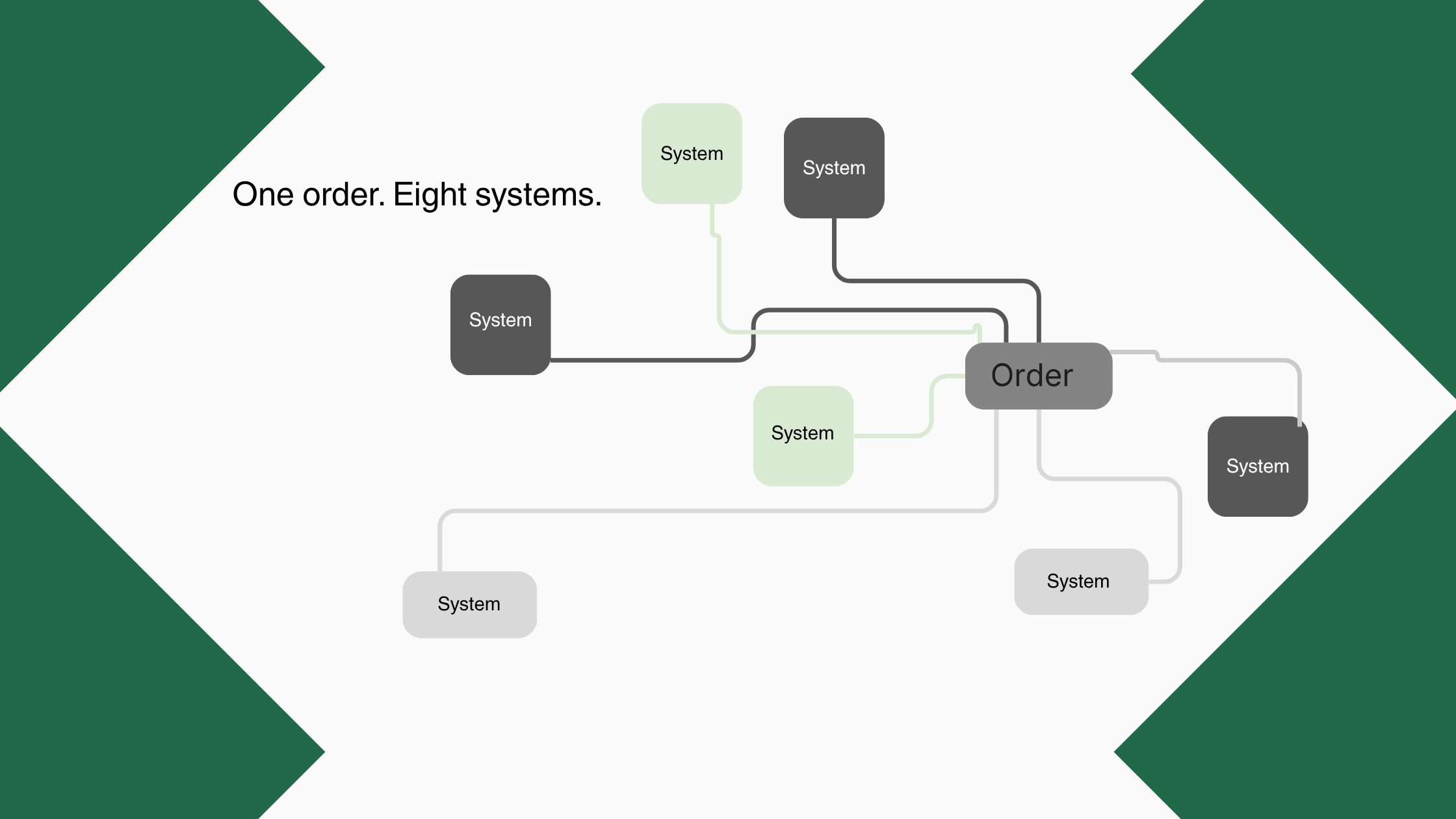
For many wholesalers, manufacturers, and distributors, an order may pass through:
- An eCommerce platform
- An EDI platform
- An ERP system
- A warehouse management system (WMS)
- A transport management system (TMS)
- Inventory management
- Finance
- Customer service
Each system performs a specific task. The challenge is making sure they all speak the same language.
If one system receives incomplete or incorrect information, the error often follows the order throughout the rest of the process.
Every handoff introduces risk
The more systems involved, the more opportunities for something to go wrong.
Examples include:
- Incorrect item numbers
- Duplicate orders
- Pricing mismatches
- Missing delivery information
- Delayed shipment notifications
Individually, these problems may seem minor. Collectively they create operational friction that affects customer service, finance, warehousing, and logistics.
Why structured EDI matters
This is where EDI becomes much more than invoice exchange. Instead of every system interpreting data differently, EDI provides a structured way of exchanging information between business systems.
That means:
- Purchase orders arrive consistently
- Shipment notifications contain the required information
- Invoices match the original order
- Inventory updates remain accurate
Rather than replacing ERP or warehouse systems, EDI connects them.
Modern supply chains require flexibility
Today's supply chains are far more dynamic than they were ten years ago.
Businesses, for example, regularly onboard new suppliers, add logistics partners, expand into new countries, etc. Moreover, they regularly adopt new compliance requirements.
Each new connection adds another integration point. Modern cloud EDI platforms simplify this complexity by acting as the central communication layer between systems.
Instead of creating point-to-point integrations every time, companies gain one platform capable of handling multiple document standards, protocols, and trading partners.
Visibility is just as important as automation
Automation is only valuable if businesses know what's happening. Modern EDI platforms don't simply exchange documents.
They also provide:
- Document tracking
- Error notifications
- Validation
- Monitoring
- Audit trails
This visibility allows businesses to identify problems before they disrupt operations.
In conclusion
Most people never see the complexity behind a customer order, but supply chain teams do. Every additional system increases both opportunity and risk.
Structured EDI doesn't remove complexity. It, however, manages it, allowing every system to exchange accurate information reliably and automatically.
Curious how your systems could work together more efficiently?
Talk to one of our EDI specialists.


.png?width=2240&height=1260&name=Greeces%20e-invoicing%20deadline%20is%20closer%20than%20you%20think%20-%20blog%20post%20(1).png)