
Skip to content

E-invoicing around the world

Stay ahead of e-invoicing requirements

← Explore all countries
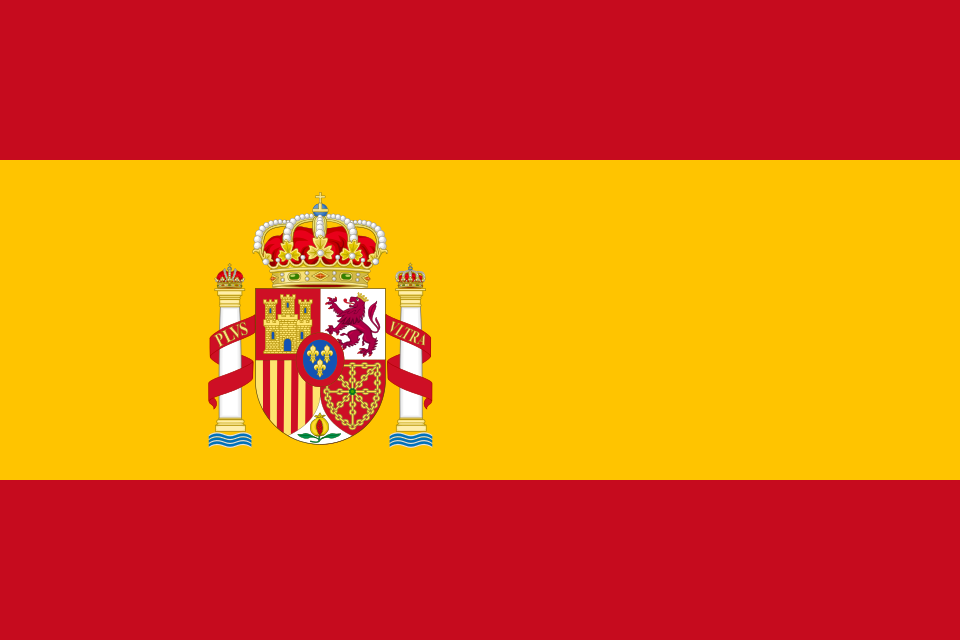
Spain flag

E-invoicing in Spain

Spain has adopted its mandatory B2B e-invoicing framework. Implementation will take place in two phases, with the exact dates linked to the forthcoming ministerial order governing the public e-invoicing solution.

Upcoming mandate Approval in progress

At a glance

B2B e-invoicing Upcoming mandate
B2G e-invoicing Mandatory
Infrastructure Public solution/private platforms

Mandatory B2B e-invoicing will be introduced in two phases following the entry into force of the ministerial order governing Spain's public e-invoicing solution: after 12 months for businesses with annual turnover above EUR 8 million and after 24 months for other businesses.

Spain has adopted a mandatory B2B e-invoicing framework under the Crea y Crece Law and Real Decreto 238/2026. The system will require businesses and professionals within scope to issue, transmit and receive structured electronic invoices for applicable domestic B2B transactions.

Implementation will take place in two phases following the entry into force of the ministerial order governing the public e-invoicing solution: after 12 months for businesses with annual turnover above EUR 8 million and after 24 months for other businesses.

The mandate applies broadly to businesses and professionals that are required to issue invoices when the recipient is a business or professional established in Spain or operating through a Spanish permanent establishment or habitual residence.

The rollout depends on turnover. Businesses with annual turnover above EUR 8 million will enter scope first, followed by the remaining businesses. Certain transactions and simplified invoices may fall outside the general requirement, depending on the applicable invoicing rules.

Businesses within scope must issue, transmit, and receive electronic invoices through the Spanish e-invoicing system. Companies may use the public solution or private e-invoicing platforms that meet the applicable technical and interoperability requirements.

Where a business uses a private platform instead of the public solution, the platform must transmit a faithful electronic copy of each invoice to the public e-invoicing solution. The framework also introduces obligations to communicate invoice status information, improving visibility into delivery, acceptance, and payment.

Spain's future B2B e-invoicing infrastructure will combine a public e-invoicing solution with private electronic invoice exchange platforms. Businesses can use one or more of these channels, provided that the chosen solution complies with the national technical and interoperability requirements.

Private platforms that don't use the public solution directly must submit a faithful electronic copy of each invoice to the public system in UBL syntax. The wider technical framework is intended to ensure interoperability between the different platforms participating in the Spanish e-invoicing ecosystem.

Detailed technical specifications will continue to be defined through the ministerial order and related implementing rules.

iEDI is currently working towards supporting Spain’s upcoming B2B e-invoicing requirements.

Our platform is designed to connect existing ERP and business systems with structured electronic document exchange without requiring businesses to replace their existing setup.

As our Spain coverage becomes available and the country’s technical framework is finalised, businesses will be able to integrate structured invoice exchange into their existing ERP and invoicing workflows. Contact us to discuss your requirements and the current status of our Spain coverage.

Frequently asked questions

Is B2B e-invoicing mandatory in Spain?
Spain has established a framework for mandatory B2B e-invoicing, but the general obligation has not yet taken effect. Implementation depends on the ministerial order governing the technical system. 
When will mandatory B2B e-invoicing begin in Spain?
Businesses with annual turnover above EUR 8 million will enter scope 12 months after the relevant ministerial order takes effect. Other covered businesses will follow after 24 months. 
How will Spain's B2B e-invoicing system work?
The framework will combine a public electronic invoicing solution with qualifying private e-invoicing platforms, with interoperability requirements between participating systems. 
Which e-invoice format will Spain use?
The framework supports structured electronic invoicing. Private platforms that do not use the public solution directly will be required to transmit a faithful copy of relevant invoices to the public system in UBL syntax. 
Does iEDI support Spain's upcoming mandate?
iEDI is currently working towards supporting Spain's upcoming B2B e-invoicing requirements. Contact us to discuss your requirements and the current status of our Spain coverage. 
Planning ahead?

Preparing for e-invoicing in Spain?

Talk to us about the upcoming requirements and iEDI's plans for supporting electronic invoicing in Spain.