Germany's transition to mandatory e-invoicing is often discussed as a national compliance initiative.
In reality, it is part of a much larger European transformation.
Important milestone towards standardised e-invoicing
By July 2030, the EU aims to make structured electronic invoicing the standard for cross-border B2B trade. Businesses that continue relying on PDF invoices and manual processes will increasingly face challenges when trading internationally.
Germany is one of the most important milestones in that journey.
As Europe's largest economy, changes to German invoicing requirements affect not only German businesses but also suppliers, customers, and trading partners across the continent.
It's not about Peppol
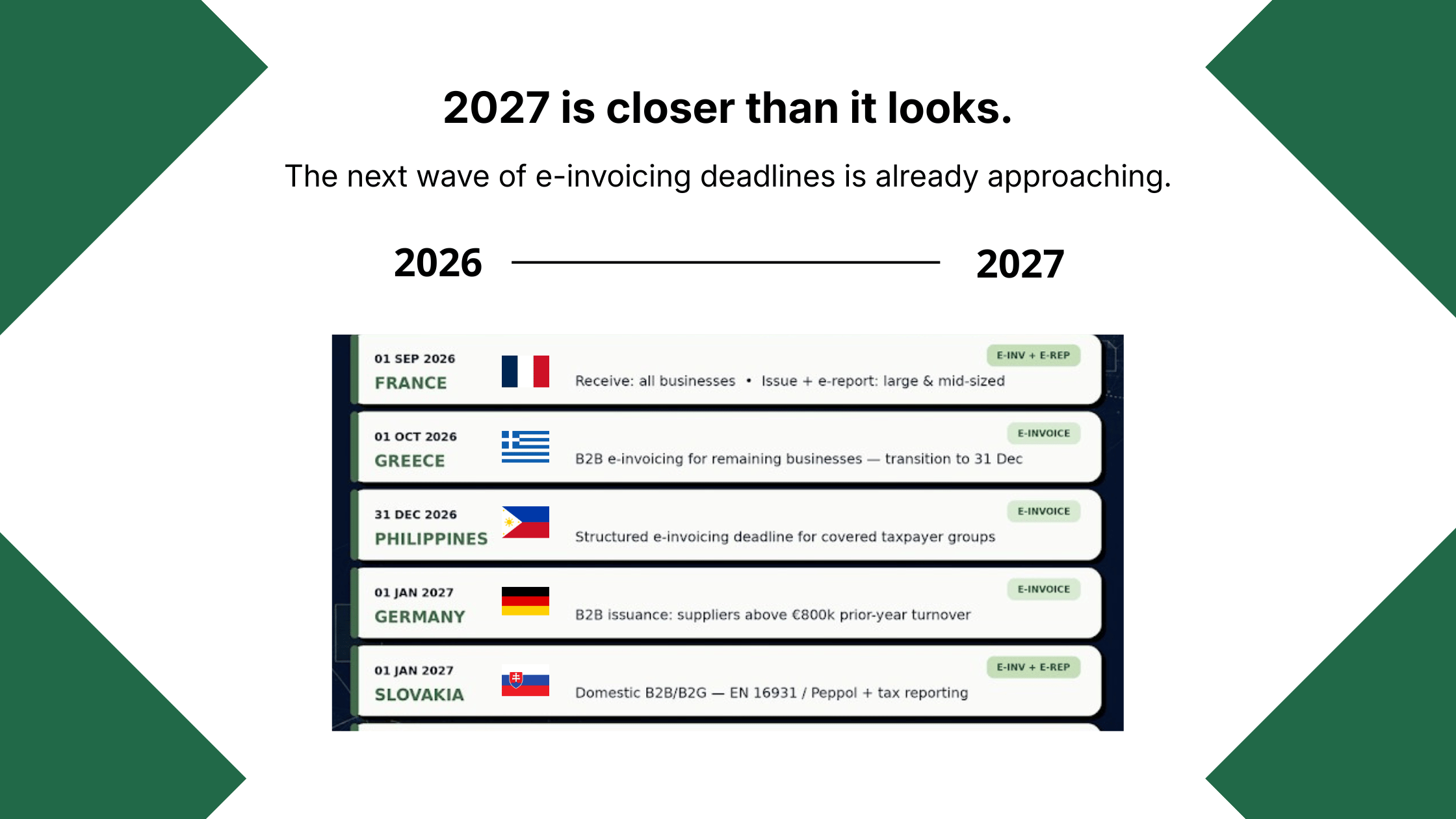
From January 2027, larger German businesses will be required to be capable of receiving electronic B2B invoices. Smaller businesses will benefit from longer transition periods.
One important point is often misunderstood:
Germany isn’t mandating Peppol.
The regulation focuses primarily on electronic invoice formats that comply with the European EN16931 standard.
Examples include:
- XRechnung
- ZUGFeRD
- Other EN16931-compliant formats
The transport method is a separate matter.
Businesses may exchange compliant invoices through Peppol, email, supplier portals, or other agreed electronic channels.
This distinction matters because it allows organisations to focus on what is truly required: ensuring they can generate, receive, and process structured invoice data.
How you should prepare if you trade with German partners
For businesses trading with German customers or suppliers, preparation should include:
- Reviewing ERP capabilities
- Evaluating invoice formats
- Preparing to receive electronic invoices
- Improving invoice data quality
- Assessing future exchange requirements
Germany's rollout isn't happening in isolation.
It forms part of a wider European shift towards structured, automated invoice exchange.
For many businesses, preparing for Germany is not simply about complying with a German regulation.
It is about preparing for the future of international trade.
Because by 2030, electronic invoicing will no longer be a competitive advantage.
It’ll simply be the way business is done.
Are you ready for e-invoicing by 2030?
iEDI is ready to help you comply with European e-invoicing mandates.
Talk to an EDI expert.


.png?width=2240&height=1260&name=Greeces%20e-invoicing%20deadline%20is%20closer%20than%20you%20think%20-%20blog%20post%20(1).png)