Why manual invoicing is becoming more expensive than you think
For many businesses, paper invoices are already a thing of the past. Instead, invoices are sent as PDFs by email.
While that feels digital, the reality is that most PDF invoices are still processed manually. Someone creates them, sends them, receives them, opens them, enters the information into an ERP or accounting system, checks for errors, approves them, and finally archives them.
The invoice may no longer be printed, but the process behind it is often just as manual as it was twenty years ago.
That manual process carries costs that many businesses underestimate.
And as governments across Europe introduce mandatory e-invoicing requirements, those costs are no longer just operational—they're becoming compliance risks.
The cost isn't paper. It's manual work
The biggest expense isn't paper, envelopes, or postage.
It's the time people spend handling invoices.
Think about the typical journey of a PDF invoice:
- It's generated in one system.
- It's emailed to the customer.
- Someone receives it.
- The invoice is opened manually.
- Information is checked.
- Data is entered into another system.
- The invoice is approved.
- It's archived for future reference.
Even if each invoice only requires a few minutes of manual work, those minutes quickly become hundreds of hours every year.
That's time finance teams could spend on analysis, forecasting, or supporting the business instead of processing paperwork.
Manual processes create unnecessary errors
Whenever people manually transfer information between systems, mistakes happen.
Invoice numbers are typed incorrectly, and amounts are entered with decimal errors.
Duplicate invoices are created, and purchase order references are forgotten
Each small mistake creates more work. Someone has to investigate the issue, contact the customer or supplier, issue a credit note, resend documents, or delay payment.
The cost of correcting errors is almost always higher than preventing them.
Delayed invoices affect cash flow
Manual processing doesn't just consume time. It also slows payments.
Invoices waiting in inboxes, approval workflows, or manual entry queues take longer to reach the accounts payable team.
That means suppliers wait longer to get paid, while buyers spend more time following up on outstanding invoices.
Automating invoice exchange helps both parties process documents faster, improving efficiency throughout the supply chain.
Compliance is becoming a bigger concern
For many years, digital invoicing was primarily about efficiency, but today, legislation is changing that.
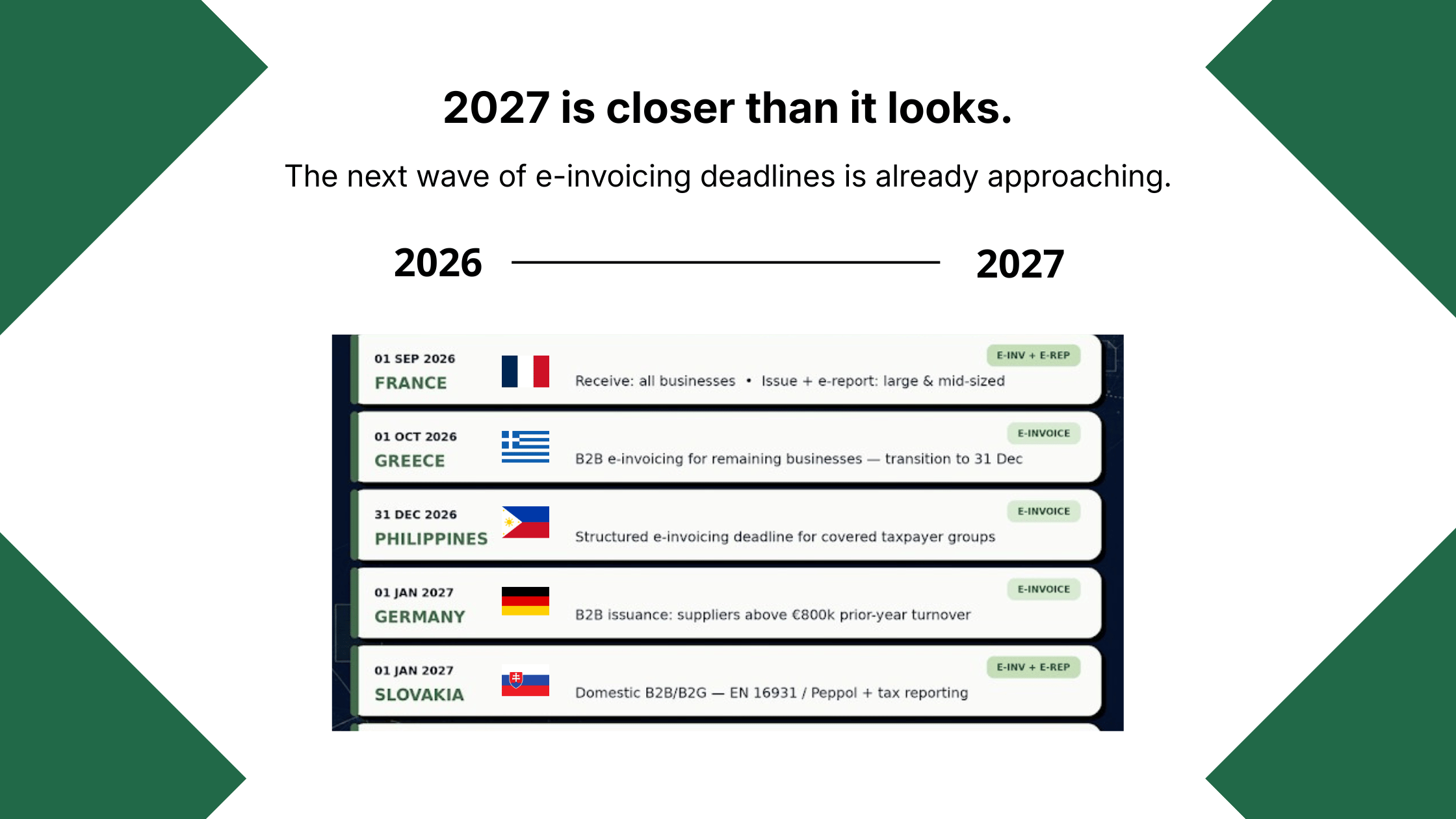
Across Europe, governments are introducing mandatory e-invoicing requirements as part of broader digitalisation initiatives.
The European Union's ViDA (VAT in the Digital Age) proposal is expected to accelerate the adoption of structured electronic invoices for cross-border B2B transactions.
At the same time, individual countries are introducing their own domestic e-invoicing frameworks, many of which use networks such as Peppol.
Businesses that continue relying entirely on PDF or paper invoices may eventually find that these formats no longer satisfy legal requirements.
Structured e-invoicing changes the process
Unlike PDFs, structured electronic invoices are designed for systems rather than people.
Instead of someone manually reading an invoice and entering the data into another application, the information moves automatically between systems.
This leads to:
- Less manual work
- Fewer errors
- Faster processing
- Better data quality
- Improved compliance readiness
Rather than simply digitising a document, structured e-invoicing digitises and automates the entire process.
The future is already here
Many businesses still think e-invoicing is something they'll need to worry about in a few years.
In reality, many organisations are already receiving requirements from customers, governments, and trading partners.
Preparing now is usually much easier than responding under pressure later.
The companies that modernise their invoicing processes today aren't just saving time—they're preparing for the way business will increasingly be conducted across Europe.
Prepare for e-invoicing
At iEDI, we're always on the forefront of developments within e-invoicing mandates around the world as they arise.
Talk to an EDI expert.

.jpg?width=2240&height=1260&name=The%20hidden%20cost%20of%20paper%20invoices%20(1).jpg)

.png?width=2240&height=1260&name=Greeces%20e-invoicing%20deadline%20is%20closer%20than%20you%20think%20-%20blog%20post%20(1).png)