For years, electronic invoicing has been discussed as a future initiative. That future has already arrived.
Across Europe and beyond, governments are introducing mandatory e-invoicing requirements as part of wider digital tax and compliance strategies. The goal is simple: improve transparency, reduce VAT fraud, and modernise the way businesses exchange financial data.
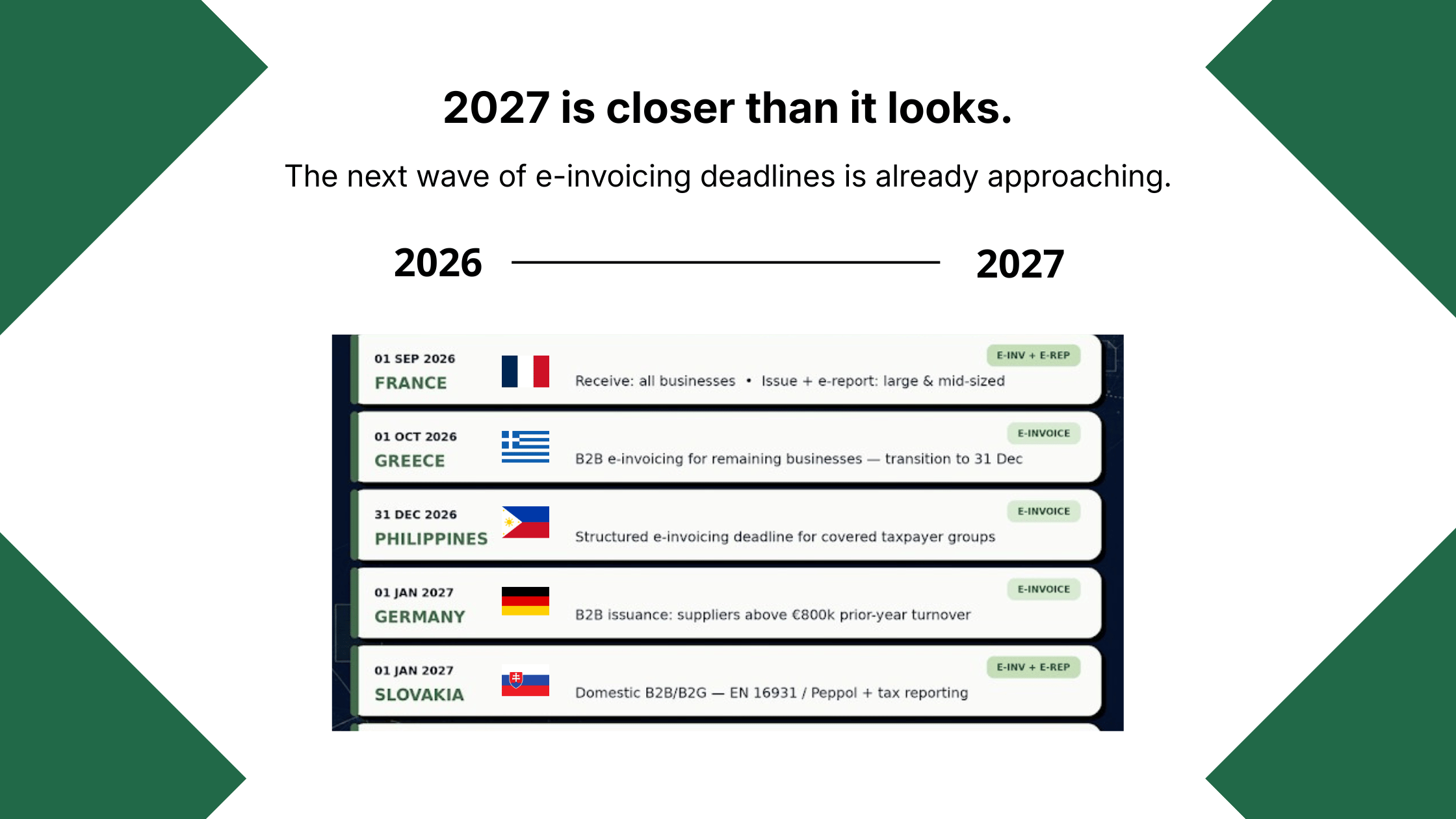
The European Union's VAT in the Digital Age (ViDA) initiative is accelerating this transition. By 2030, structured e-invoicing and digital reporting will become the standard for intra-EU B2B transactions. Individual member states are already introducing their own national mandates ahead of the EU-wide deadline.
For many businesses, this is not just an accounting change.
It affects ERP systems, customer onboarding, supplier relationships, compliance processes, and how business documents move across organisations.
Companies that wait until the final deadline risk rushed implementations, operational disruption, and compliance challenges.
Companies that prepare early gain advantages such as:
- Faster invoice processing
- Reduced manual work
- Better data quality
- Easier compliance with future regulations
- Stronger integration between customers, suppliers, and ERP systems
The reality is that e-invoicing is becoming a business requirement, not a technology or IT project.
Over the coming weeks, we will explore how different countries are approaching e-invoicing mandates, what timelines businesses need to know, and what practical steps organisations should take now. You can read more about e-invoicing mandates in Europe and beyond in our articles on Italy, France, Belgium, United Arab Emirates, Slovakia, and Germany.
The transition has already started.
The question is no longer whether e-invoicing will become mandatory. What many businesses don’t yet realise is that this isn’t simply a compliance project.
By July 2030, the EU aims to make structured electronic invoicing the standard for cross-border B2B transactions. Traditional PDF and paper invoices will no longer meet the requirements for these transactions.
In practical terms, businesses that cannot exchange structured electronic invoices may find themselves unable to trade efficiently—or compliantly—with customers and suppliers across borders.
E-invoicing is rapidly becoming a prerequisite for international business.
The question is whether your business will be ready when it does.
Are you ready for e-invoicing by 2030?
iEDI is ready to help you comply with European e-invoicing.
Talk to an EDI expert.


.png?width=2240&height=1260&name=Greeces%20e-invoicing%20deadline%20is%20closer%20than%20you%20think%20-%20blog%20post%20(1).png)