When discussing mandatory e-invoicing, Italy is often the first country mentioned.
And for good reason.
Since 2019, Italy has required domestic B2B invoices to be submitted through the government's Sistema di Interscambio (SDI) platform.
Instead of sending invoices directly between businesses, invoices pass through a government-controlled exchange platform where they are validated before delivery.
At the time, many organisations viewed the change as disruptive.
Today, Italy has become one of the clearest examples of where digital invoicing regulation is heading.
The Italian model has demonstrated how governments can increase visibility into VAT transactions while encouraging businesses to move away from manual and paper-based processes.
For organisations operating internationally, Italy offers an important lesson:
Mandatory e-invoicing isn’t a temporary trend.
It’s becoming part of the long-term infrastructure of business transactions.
Many of the systems, integrations, and compliance requirements now appearing across Europe have roots in approaches first implemented in Italy.
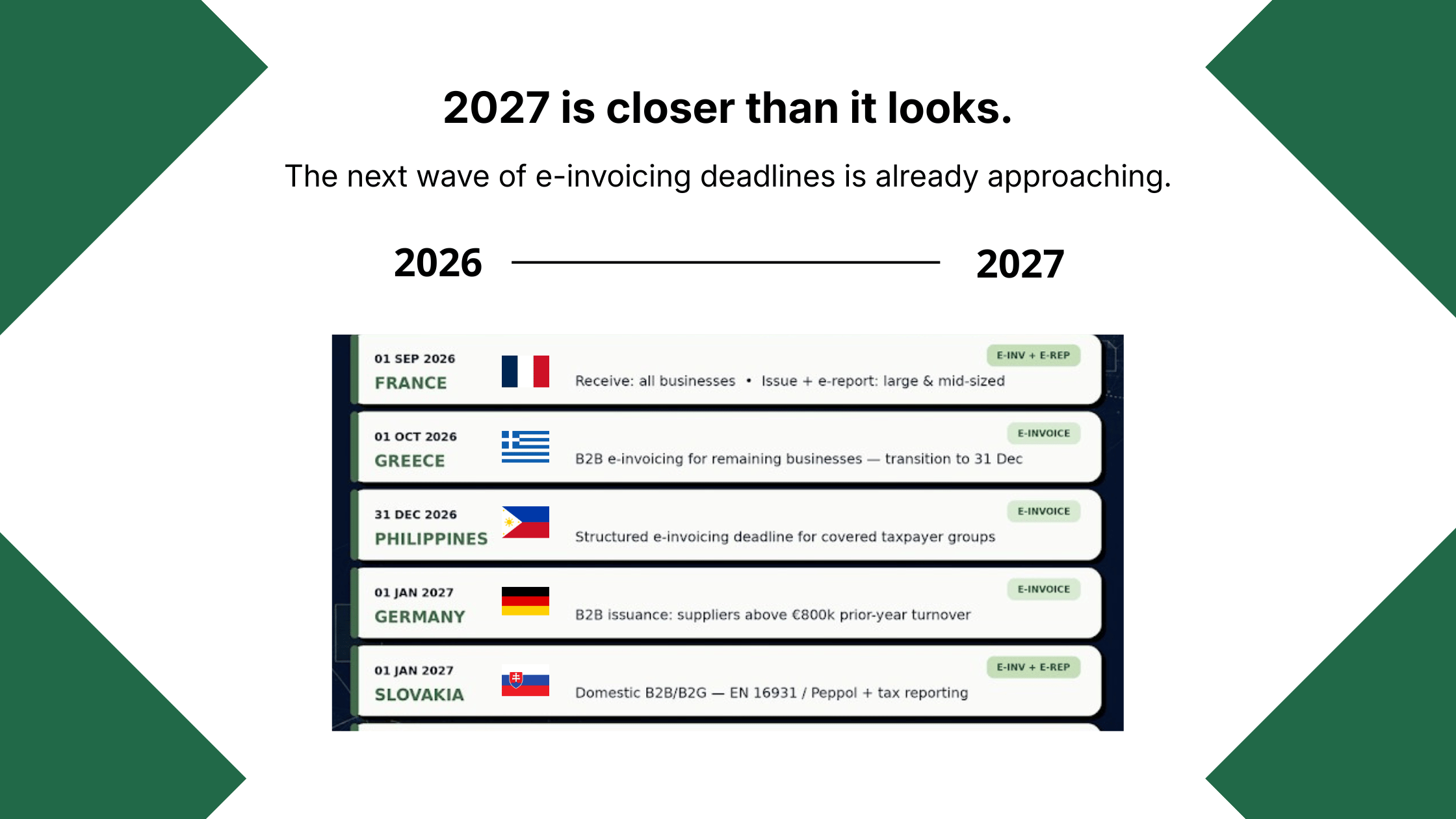
For businesses still relying on PDF invoices and manual workflows, Italy provides a glimpse of what future compliance requirements may look like elsewhere.
The countries introducing mandates today are not inventing something new.
They’re following a path Italy began years ago.
Are you ready for e-invoicing by 2030?
iEDI is ready to help you comply with European e-invoicing mandates.
Talk to an EDI expert.


.png?width=2240&height=1260&name=Greeces%20e-invoicing%20deadline%20is%20closer%20than%20you%20think%20-%20blog%20post%20(1).png)