On paper, sending an invoice should be simple.
You create it. You send it. You get paid.
That’s the expectation.
The reality, however, is very different.
It starts with structure
An invoice isn’t just a document.
It’s structured data. Every field matters:
- buyer ID
- VAT numbers
- line items
- pricing
- delivery details
And every trading partner expects it in a specific format. That could be:
- EDIFACT
- Peppol BIS
- OIOUBL
- or something else entirely
Then comes validation
Before an invoice is even accepted, it’s checked.
Does it:
- follow the correct format?
- include all mandatory fields?
- match the partner’s rules?
If not, it gets rejected. Not “later”. Immediately.
Then comes the network
Invoices don’t just get emailed. They’re routed through:
- EDI connections
- Peppol access points
- APIs or file transfers
Each with their own requirements.
Then comes compliance
In many countries, invoices must:
- follow national standards
- be reported to authorities
- meet strict validation rules
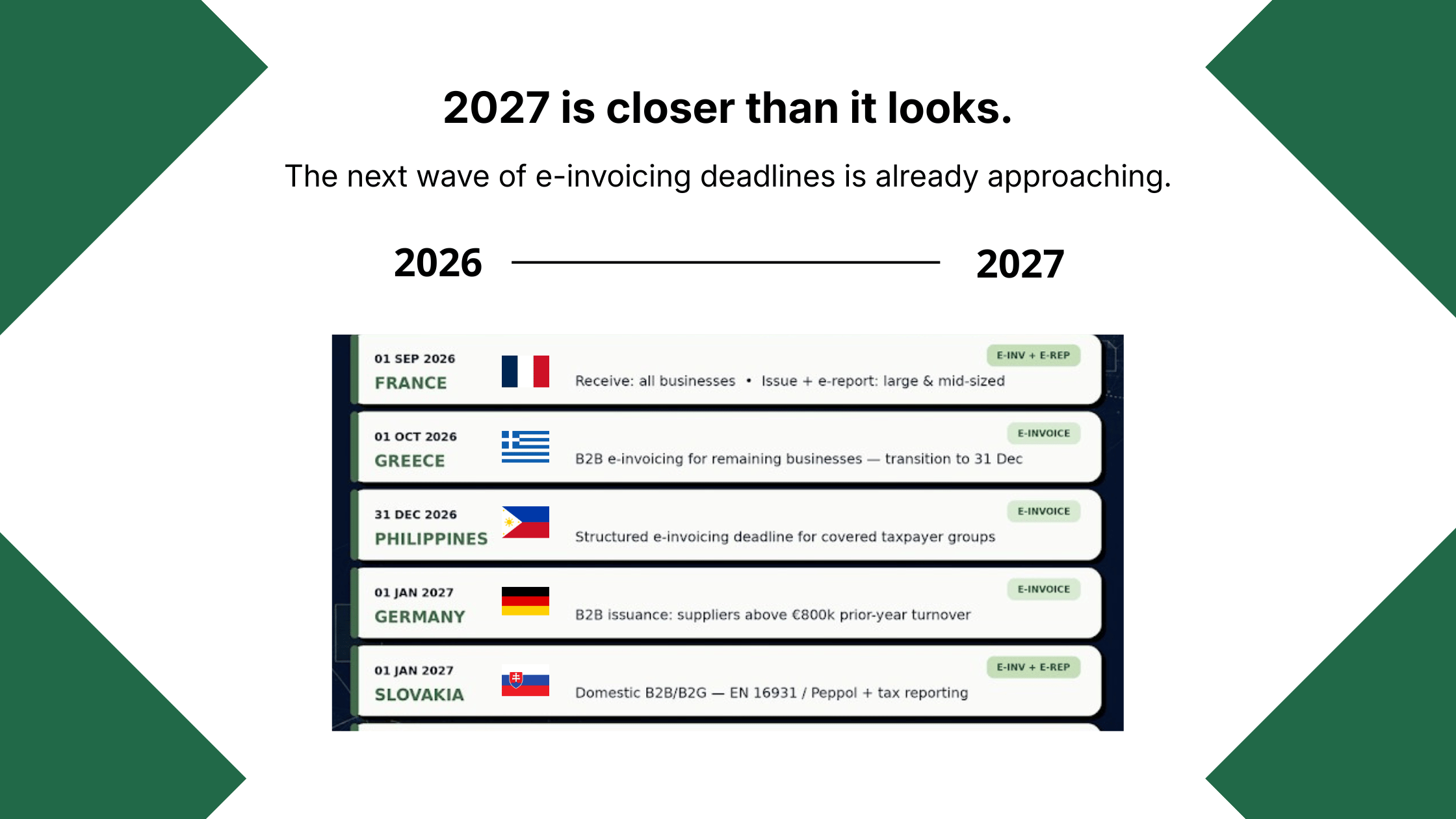
This is only increasing with ViDA, KSeF, and France PDP
So what looks simple… isn’t
From the outside, it looks like:
“Send invoice”
Behind the scenes, it’s:
Structure → validation → routing → compliance
Final thought
This is why EDI matters.
Not because it’s “nice to have”, but because it’s what makes all of the above work reliably at scale.
Want to learn more?
If you want to understand what this looks like in your setup, we’re happy to walk you through it.
Speak to an EDI expert.


.png?width=2240&height=1260&name=Greeces%20e-invoicing%20deadline%20is%20closer%20than%20you%20think%20-%20blog%20post%20(1).png)