Not every update to France's e-invoicing reform has made life harder. In fact, some of the latest changes have made implementation a little more practical
If you've been following France's e-invoicing reform over the past couple of years, you've probably noticed a pattern.
Every update seems to introduce another requirement.
Another deadline.
Another acronym.
Another reason for finance and IT teams to worry.
It's easy to come away with the impression that the project is becoming bigger and more complicated every time someone from the government publishes a new update. But that's not really the whole story.
Among the latest changes are several decisions that actually make implementation simpler.
The deadlines haven't disappeared.
The direction of travel hasn't changed.
But some of the practical requirements have become more realistic. That's worth talking about.
Regulations don't only become stricter
There's a common assumption that regulatory projects only move in one direction. That is, towards more rules, more reporting, and more administration.
In reality, large reforms evolve over time. Governments consult businesses, software providers, and industry organisations. They discover which requirements add value, and which create unnecessary complexity.
France's e-invoicing programme is no different. Several elements have been refined following consultation and feedback. The result isn't a weaker reform.
It's a more practical one.
Less reporting than originally planned
One of the most welcome adjustments concerns reporting obligations. Earlier versions of the reform included more detailed reporting requirements for certain international transactions. Some of those proposals have now been simplified.
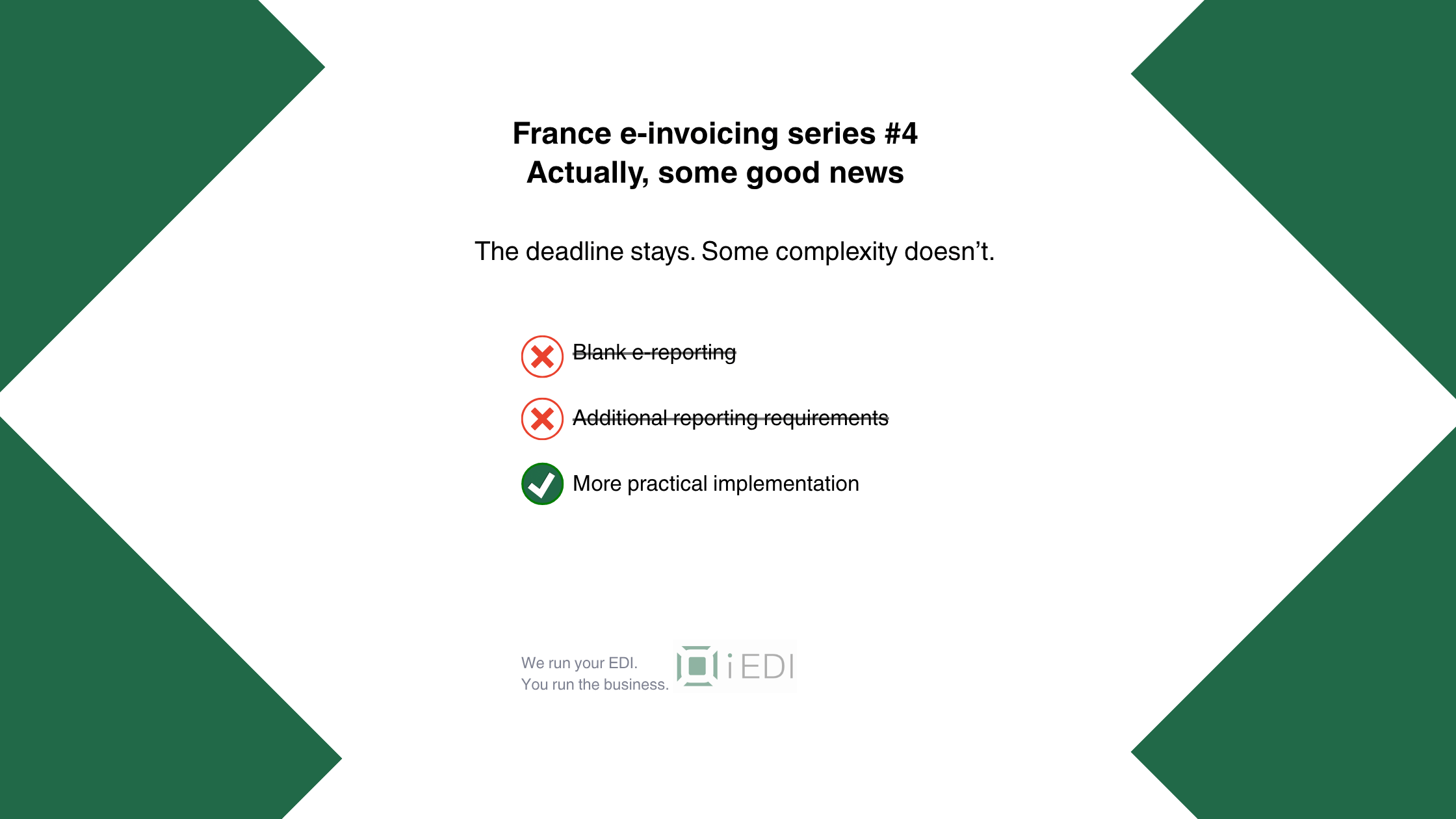
Likewise, businesses are no longer expected to submit so-called "blank" e-reporting - simply because there's nothing to declare.
That may sound like a relatively small administrative change, but in practice, it removes work that would have added little value for either businesses or tax authorities. It's a reminder that good digitalisation isn't about collecting more data.
Rather, it's about collecting the right data.
More clarity for international businesses
The revised framework also provides greater clarity for some foreign businesses operating in France.
Companies without a French SIREN number have been given additional flexibility compared with some of the earlier proposals.
For international groups with French customers or operations, these refinements help reduce uncertainty around how and when different obligations apply.
They don't remove the need to prepare, but they do make the implementation path easier to understand.
The deadline hasn't moved
It's important not to misunderstand these changes. France hasn't postponed the reform.
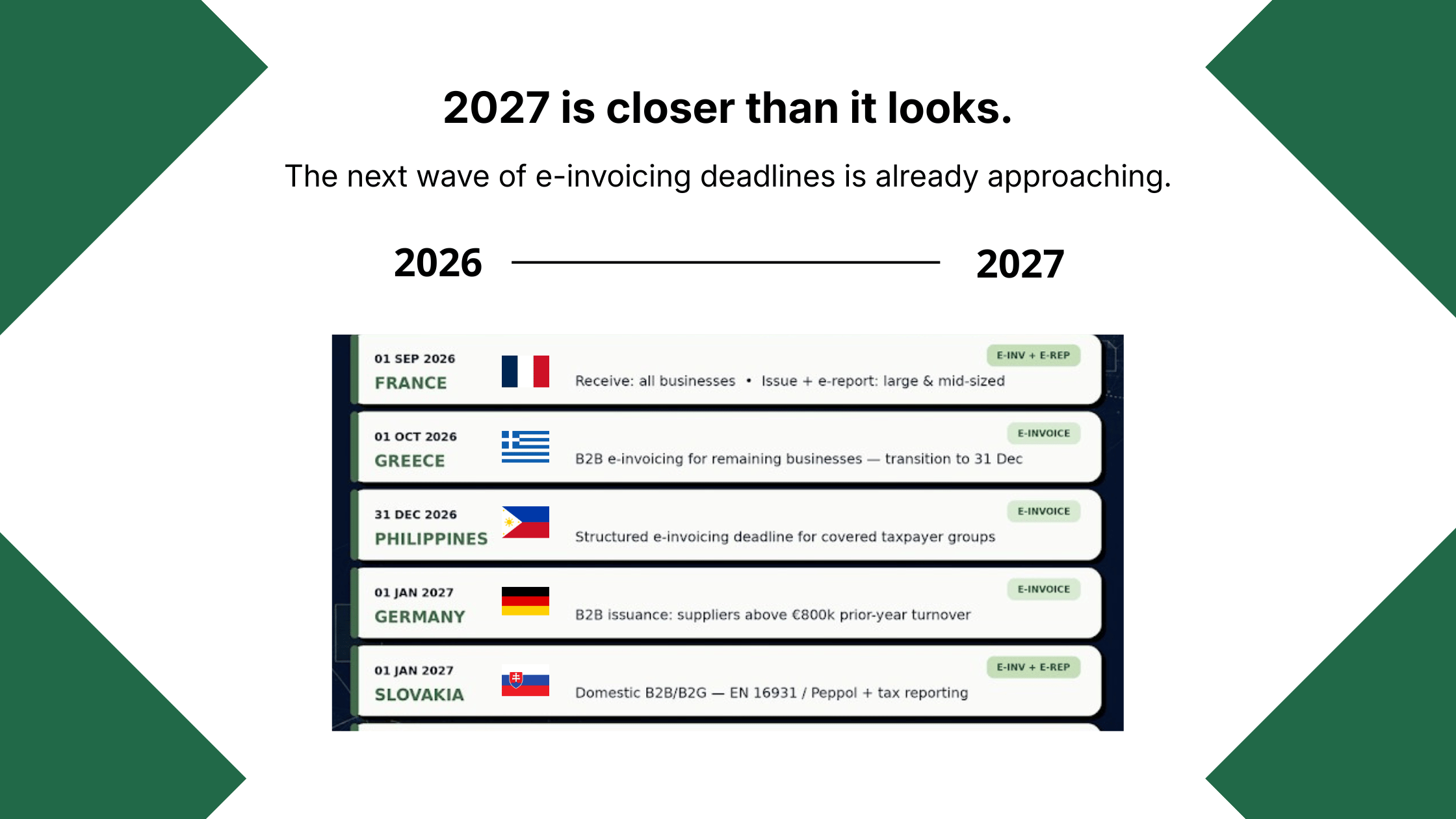
Businesses still need to prepare for the implementation timetable.
Electronic invoicing remains central to the country's broader strategy for modernising VAT reporting and business document exchange. The destination is exactly the same.
What has changed is part of the route.
Rather than asking businesses to comply with every idea considered during the early planning stages, the final framework has become more focused on the requirements that genuinely support the reform's objectives.
Why this matters
One of the biggest risks in any major regulatory project is overreacting.
Businesses sometimes invest time, money, and internal resources preparing for requirements that later change or disappear altogether.
That doesn't mean preparation is a mistake. It means preparation should be based on the latest available information rather than assumptions made two years ago.
The organisations that navigate regulatory change most successfully are rarely the ones that move first.
They're the ones that continue adjusting as the rules become clearer.
Preparation is still the right strategy
The simplifications introduced by France don't reduce the importance of electronic invoicing. If anything, they make it easier for businesses to focus on what really matters.
-
Can we receive compliant electronic invoices?
-
Can we issue them when required?
-
Do our systems support the required formats?
-
Do we understand how we'll connect to the new ecosystem?
These questions remain exactly the same.
Fortunately, they're also the questions that deliver the greatest long-term value beyond compliance.
A useful reminder
It's easy to focus only on the headlines that create pressure.
Deadlines.
Mandates.
Compliance.
But good regulation also involves listening.
Adjusting.
Removing unnecessary complexity where possible.
France's latest updates demonstrate exactly that. The reform remains ambitious.
It also appears to be becoming more practical.
Closing remark
If you've been feeling overwhelmed by France's e-invoicing reform, here's the encouraging news.
The government hasn't made the project bigger. In several important areas, it's made it simpler.
That's good news for businesses - not because preparation is no longer necessary, but because businesses can now spend more time preparing for the requirements that actually matter, rather than the ones that no longer do.
Sometimes the most valuable regulatory update isn't a new rule.
It's the decision to remove one.


.png?width=2240&height=1260&name=Greeces%20e-invoicing%20deadline%20is%20closer%20than%20you%20think%20-%20blog%20post%20(1).png)