Much of Europe is currently talking about e-invoicing in the future tense.
When will the mandate begin? Which businesses will be affected? How much time is left to prepare?
Serbia is in a rather different position.
Its mandatory B2B e-invoicing regime has already been in place for more than three years.
Since 1 January 2023, Serbian private-sector VAT payers within scope have been required to send, receive, and store electronic invoices through the country’s electronic invoice system, better known as SEF. Public-sector implementation began even earlier, making Serbia one of the more mature examples of mandatory electronic invoicing in the region.
And that makes Serbia interesting for a reason that has relatively little to do with another e-invoicing deadline.
It gives us a glimpse of what happens after e-invoicing becomes normal.
Because Serbia isn't stopping at the invoice.
First came the electronic invoice
The move to SEF fundamentally changed how invoices are exchanged in Serbia.
Rather than treating an invoice simply as a document sent from one company to another, businesses within scope exchange invoices through a centralised electronic system.
The rollout happened in phases. Public-sector users entered first, followed by transactions between businesses and government. From 1 January 2023, mandatory electronic invoicing expanded to private-sector B2B transactions within scope.
By that point, Serbia had effectively moved structured electronic invoicing into the everyday operations of a large part of its economy.
But implementing a mandate doesn't mean the underlying system stops developing. Far from it.
SEF is still evolving
One of the more interesting things about mature e-invoicing regimes is that there isn't necessarily a point at which the project is simply "finished."
Requirements change. New functionality appears. Technical instructions are updated. Businesses and software providers have to keep pace.
Serbia demonstrates that rather neatly.
During 2026 alone, SEF has gone through numerous updates. Version 4.0.0 entered production at the end of July, followed almost immediately by version 4.1.0, which entered production on 3 August.
For businesses, there is a broader lesson here.
E-invoicing compliance isn't necessarily a one-time integration project.
Connecting to the required infrastructure is one thing. Maintaining that connection as legislation, specifications, and systems evolve is another.
And Serbia's next development makes that even clearer.
Now the shipment is becoming digital too
An invoice describes a commercial transaction.
But an invoice isn't the only document moving between businesses.
Goods move too.
And those physical movements create their own trail of business documents.
This is where Serbia's e-Otpremnica, or electronic delivery note system, comes in.
The system went live at the end of 2025, with the first statutory obligations taking effect from 1 January 2026. Those initial requirements cover public-sector movements and certain private-sector activity involving the public sector or excise goods.
The next significant step comes on 1 October 2027.
From then, obligations expand to electronic delivery notes for relevant movements between private-sector businesses, including non-excise goods. Serbia's official guidance confirms that private-sector-to-private-sector electronic delivery notes for these movements become mandatory from that date.
In simple terms:
First the invoice became structured. Now the shipment is following it.
Why electronic delivery notes matter
At first glance, replacing a paper delivery note with an electronic one might sound like another administrative digitisation project. The implications are broader than that, though.
Consider what happens during a typical B2B transaction.
A customer places an order. The supplier confirms it. Goods leave a warehouse. A delivery document accompanies the shipment. The customer receives the goods. An invoice follows. Eventually, payment closes the commercial cycle.
Historically, different parts of that journey may have existed in very different forms.
The order might arrive through EDI.
The warehouse might operate in an ERP or WMS.
The delivery note might still be printed.
The invoice might be electronic.
And somebody may then have to reconcile information across all of them when something doesn't match.
As more of these documents become structured and digitally connected, the opportunity isn't simply to eliminate paper. It's to connect commercial data and physical goods movements more closely.
That can make it easier to trace what was ordered, what actually left the warehouse, what arrived, and what was eventually invoiced.
Serbia may be showing where digital trade is heading
This is what makes Serbia particularly relevant beyond its own borders.
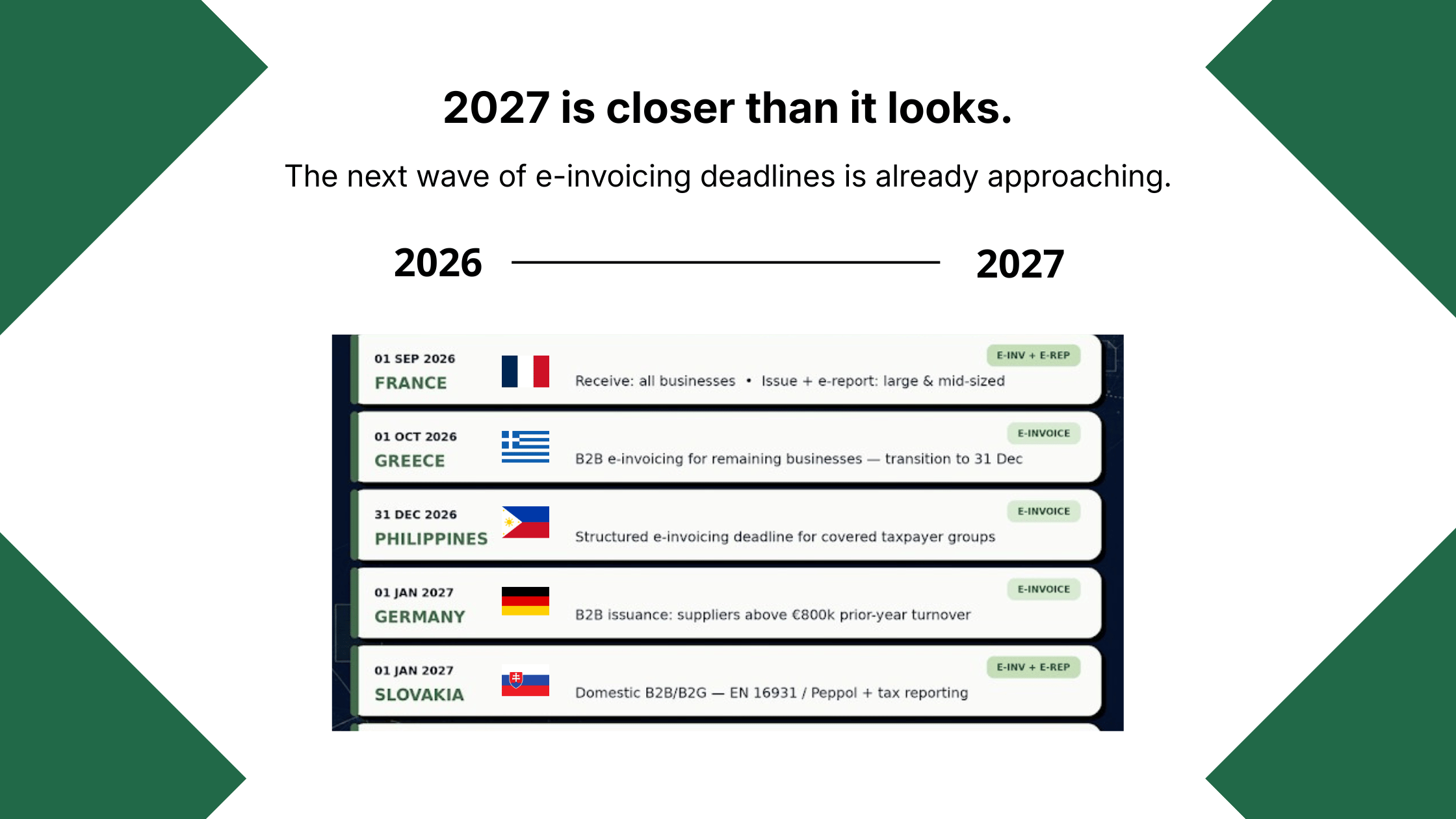
Across Europe, attention is understandably focused on electronic invoicing. France, Greece, Belgium, Poland, and other countries are introducing or expanding requirements, while the EU's ViDA reforms are pushing cross-border VAT reporting towards a more digital future.
But invoices are only one part of B2B document exchange.
Orders, order confirmations, dispatch advice, delivery notes, invoices, and other documents all describe different stages of the same commercial relationship.
Businesses using EDI already know this.
An automated invoice isn't nearly as useful if the processes before it are still fragmented.
Serbia's development therefore points towards a bigger idea: The future isn't simply electronic invoicing. It's increasingly structured digital trade.
What does this mean for international businesses?
For businesses operating in Serbia, the practical consequences depend on the transactions they perform and whether they fall within the relevant requirements.
But there are some useful questions to start asking. If your Serbian operation already exchanges invoices through SEF, how is that connection currently managed? How closely is it integrated with your ERP? Are changes to SEF specifications monitored internally or by a provider?
And if your business moves goods in Serbia, what role will electronic delivery notes play in your processes as the requirements expand?
That matters particularly for international companies.
A business may have one ERP environment serving several countries while each local market introduces different platforms, reporting requirements, and document rules.
The technical challenge therefore isn't always:
"How do we comply with Serbia?"
Increasingly, it is:
"How do we manage Serbia alongside everything else?"
From compliance project to infrastructure
Three years after mandatory B2B e-invoicing arrived, Serbia provides a useful counterpoint to countries currently approaching their first major mandate dates.
Getting ready for an e-invoicing deadline matters.
But the deadline isn't the end of the story.
Systems evolve. Requirements expand. New documents become structured. And integrations that were originally built simply to satisfy a compliance requirement gradually become part of everyday business infrastructure.
Serbia is already moving into that next stage.
For companies doing business there, the question is no longer simply whether they can send an electronic invoice.
It's whether their wider document exchange is ready for what comes next.
At iEDI, we help businesses manage EDI and electronic document exchange across trading partners, systems, and markets. If you operate in Serbia or need to connect Serbian requirements with a wider international EDI setup, we can help you determine the right approach.

.png?width=2240&height=1260&name=Serbia%20was%20early%20to%20e-invoicing.%20Now%20it%E2%80%99s%20moving%20beyond%20the%20invoice%20(1).png)

.png?width=2240&height=1260&name=Greeces%20e-invoicing%20deadline%20is%20closer%20than%20you%20think%20-%20blog%20post%20(1).png)