Why every business in France needs to be ready to receive e-invoices from 1 September 2026 - even if they don't have to issue them yet
Ask someone about France's upcoming e-invoicing reform, and you'll often hear the same response:
"We're a small company. We don't have to worry until 2027."
It's an understandable conclusion. After all, much of the conversation has focused on when different categories of businesses will be required to issue electronic invoices.
But that's only half the story.
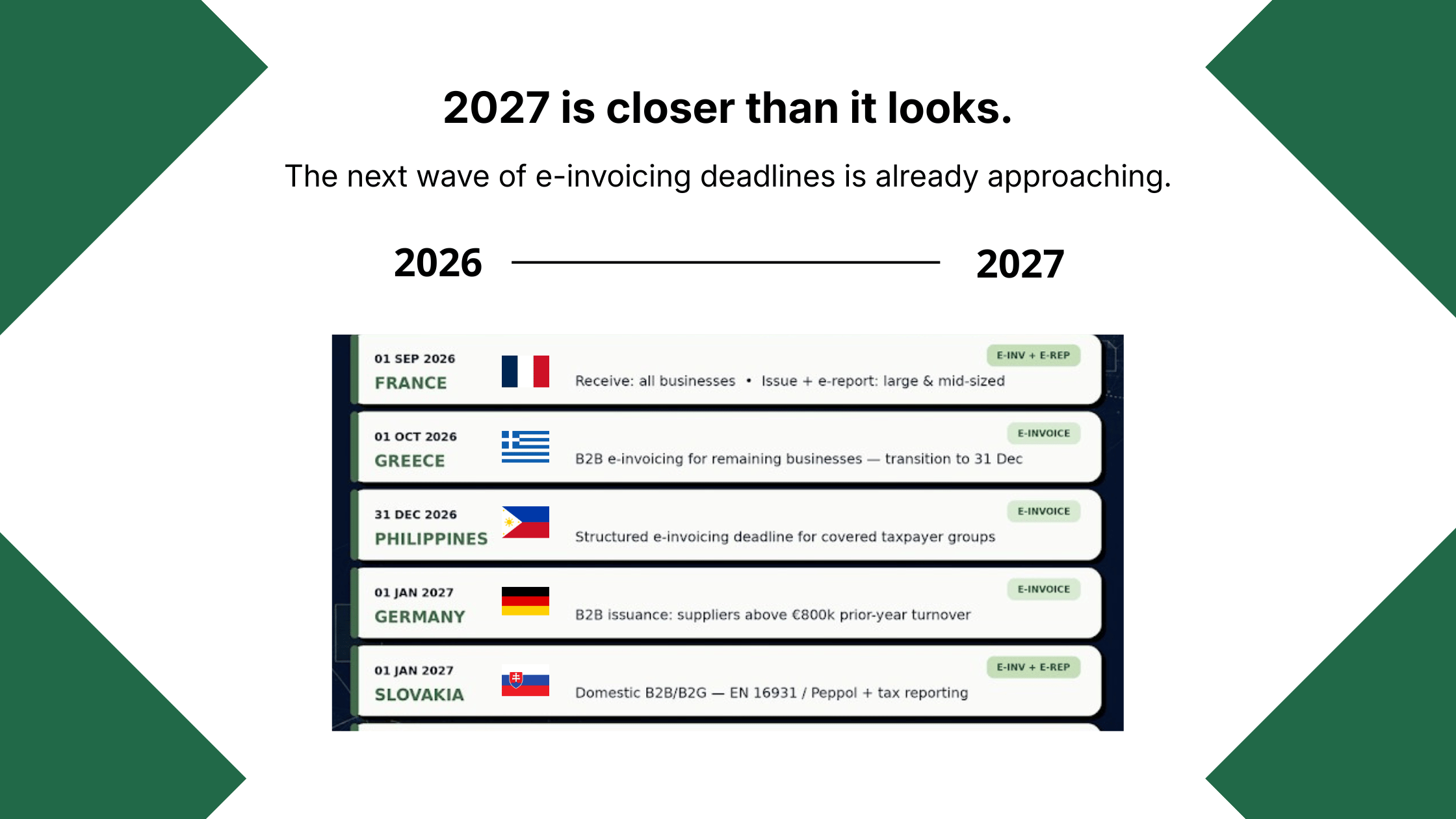
What many organisations overlook is that from 1st of September, 2026, every business in France—regardless of size—must be able to receive compliant electronic invoices.
Not in 2027. Not when they become large enough.
From day one.
That distinction may sound minor, but it has significant practical implications for businesses across France.
Sending and receiving follow different timelines
France's e-invoicing reform introduces two separate obligations.
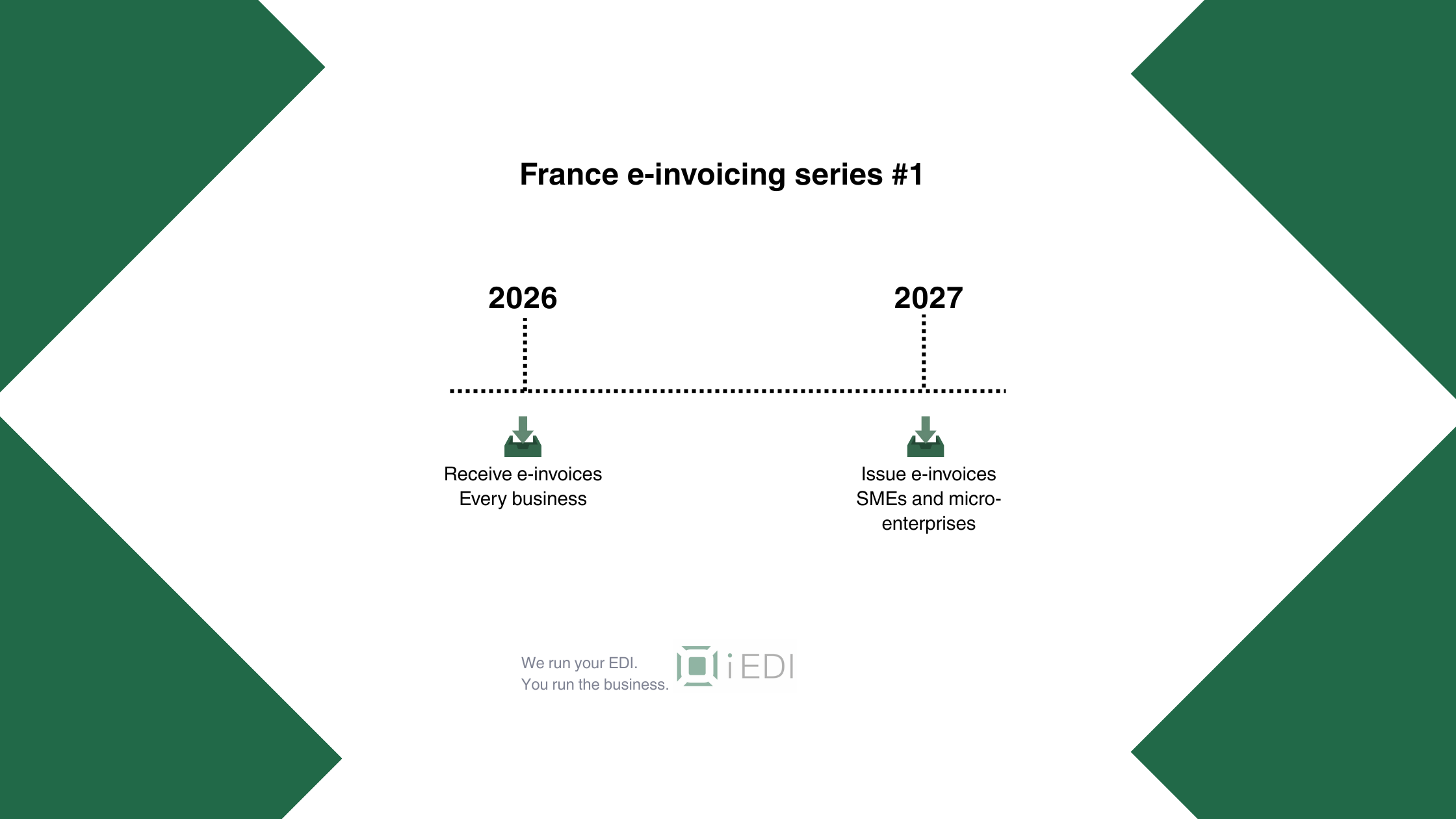
The first concerns issuing electronic invoices. This is being introduced in phases, with the largest companies required to comply first, followed by medium-sized businesses, and, finally, SMEs and micro-enterprises.
This phased approach has understandably led many smaller businesses to believe they have another year before they need to prepare.
The second obligation, however, is different.
From 1st of September 2026, all businesses subject to the reform must be capable of receiving electronic invoices, regardless of when they are required to issue them.
This means that even if your own invoices can continue to be sent using your existing process for another year, your systems still need to be ready to receive compliant invoices from customers and suppliers that have already transitioned.
Why this matters in practice
Imagine one of your largest customers is required to issue electronic invoices from September 2026.
On the 2nd of September, they send you your first compliant invoice through the new system.
If your organisation can't receive it, the issue is no longer theirs. It's yours.
The regulation doesn't pause because a supplier or customer isn't ready.
Once businesses begin issuing compliant electronic invoices, they will expect their trading partners to receive them in the same way.
That is why the receiving obligation matters so much.
It's not simply a legal requirement. It's about ensuring business can continue without unnecessary disruption.
Receiving an e-invoice is more than opening a PDF
Part of the confusion comes from the word electronic.
Many businesses already receive invoices by email and assume that means they're prepared.
But under the French reform, compliant electronic invoices aren't simply PDFs attached to an email.
They are structured electronic documents designed to be processed automatically by business systems.
Instead of someone opening an attachment and manually entering information into an ERP or accounting system, the invoice data is exchanged in a standardised format that software can read directly.
That reduces manual processing, improves data quality, and supports more efficient financial workflows.
However, it also means the receiving system must be capable of handling those structured documents.
Why smaller businesses are particularly vulnerable
Large organisations have often been preparing for these changes for months, sometimes years.
Many smaller businesses, on the other hand, have understandably focused on the phased deadlines for issuing invoices.
As a result, some have overlooked the receiving requirement entirely. That creates a risk.
Businesses that delay preparations until 2027 may discover they have a compliance gap long before their own issuing deadline arrives.
The closer we get to September 2026, the more companies will begin testing systems, activating platforms, and onboarding trading partners.
Waiting until the last minute is likely to mean competing for implementation resources at the busiest time.
Preparation doesn't have to be complicated
The good news is that being ready to receive electronic invoices doesn't necessarily require a complete replacement of existing systems.
For many organisations, preparation starts with understanding a few key questions:
- Can our current ERP or accounting system receive structured electronic invoices?
- Which platform will we use to exchange invoices?
- Are our customers already preparing for September?
- Do we need support connecting to the appropriate network or certified platform?
Answering these questions now provides far more flexibility than trying to resolve them after customers have already begun sending electronic invoices.
A reform that's bigger than compliance
Although the reform is driven by legislation, its impact extends well beyond compliance.
Electronic invoicing creates opportunities to reduce manual administration, improve invoice accuracy, and speed up financial processes.
Many organisations are already seeing these operational benefits in countries where structured e-invoicing has become standard. France's reform should therefore be viewed as more than another regulatory deadline.
It's part of a broader shift towards digital business processes across Europe.
Final thoughts
The biggest misconception surrounding France's e-invoicing reform isn't about technology. It's about timing.
Many businesses believe they have until 2027 because that's when they must begin issuing electronic invoices.
But the ability to receive compliant electronic invoices arrives much sooner.
From 1st of September, 2026, every business covered by the reform needs to be ready.
The organisations that begin preparing now will have time to evaluate their systems, understand their options and implement the right solution without unnecessary pressure.
Those that wait may discover the deadline they thought belonged to someone else has already arrived.
Want help ensuring you'll make the deadline?
Talk to an EDI expert.


.png?width=2240&height=1260&name=Greeces%20e-invoicing%20deadline%20is%20closer%20than%20you%20think%20-%20blog%20post%20(1).png)