When one EDI mandate creates hundreds of projects
When people think about EDI projects, they often picture a large retailer or manufacturer deciding to modernise its operations.
What's discussed much less is what happens next.
Because when a major company decides to exchange orders and invoices electronically, the project doesn't stop there. It extends across the entire supply chain.
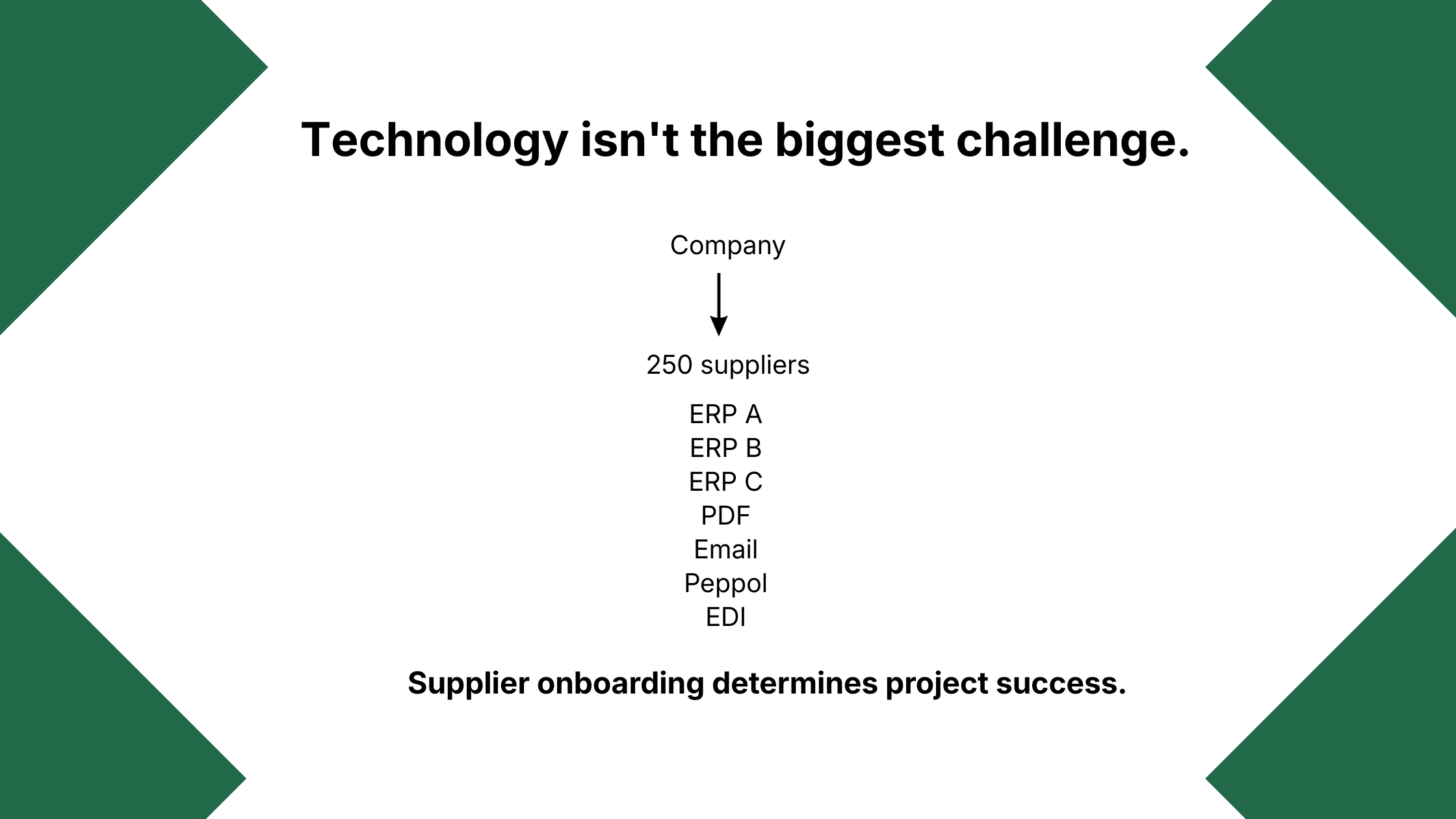
One decision by a single customer can trigger implementation projects for hundreds—or even thousands—of suppliers.
If you've ever received an email informing you that a customer will soon require EDI or Peppol, you'll know exactly what this feels like.
One customer's decision becomes everyone else's priority
Imagine receiving the following message from one of your largest customers:
"From 1st ofJanuary, all purchase orders and invoices must be exchanged electronically using EDI."
For your customer, this announcement is the final step in months of planning. For your business, it's the beginning of a new project.
Suddenly, questions start appearing:
- Does our ERP system support EDI?
- Do we need an EDI provider?
- How long will implementation take?
- Will we meet the deadline?
- What happens if we don't?
Multiply that by hundreds of suppliers, and it becomes clear why large EDI rollouts affect far more businesses than the organisation introducing the requirement.
Why customers introduce EDI in the first place
From the customer's perspective, requiring EDI makes perfect business sense.
Instead of manually processing emails, PDFs, and paper documents, structured electronic documents can flow automatically between systems.
That typically means:
- Faster order processing
- Fewer manual tasks
- Fewer invoice errors
- Better visibility across the supply chain
- Improved compliance with customer and regulatory requirements
For organisations handling thousands of transactions every day, even small efficiency improvements can have a significant impact.
It's easy to see why more businesses are choosing to standardise the way they exchange business documents.
The challenge shifts to suppliers
While the customer may have spent months planning the transition, suppliers often have much less time to prepare.
Many companies only start thinking about EDI after receiving a requirement from a customer. At that point, they're balancing implementation alongside their day-to-day business. Questions that once seemed optional suddenly become urgent:
- Can our existing systems support EDI?
- Which document types do we need to exchange?
- How much internal resource will this require?
- How quickly can we be operational?
For smaller organisations with limited IT resources, these questions can quickly become overwhelming.
It's not just about technology
One common misconception is that EDI projects are primarily technical.
In reality, technology is only one part of the process.
Businesses also need to:
- Understand their customer's requirements
- Configure document formats correctly
- Test every document flow
- Coordinate timelines with customers and internal teams
- Train employees on new processes
The most successful implementations are often those that combine the right technology with experienced guidance.
The companies that adapt fastest are already prepared
Businesses that already use structured digital processes are generally much better positioned when new customer requirements arise.
Instead of treating every EDI request as a completely new project, they can often connect additional trading partners using an existing platform.
That means:
- Quicker onboarding
- Less disruption to daily operations
- Reduced implementation effort
- Greater flexibility when new customers introduce similar requirements
As more organisations adopt EDI and Peppol, this flexibility becomes increasingly valuable.
Why this matters now
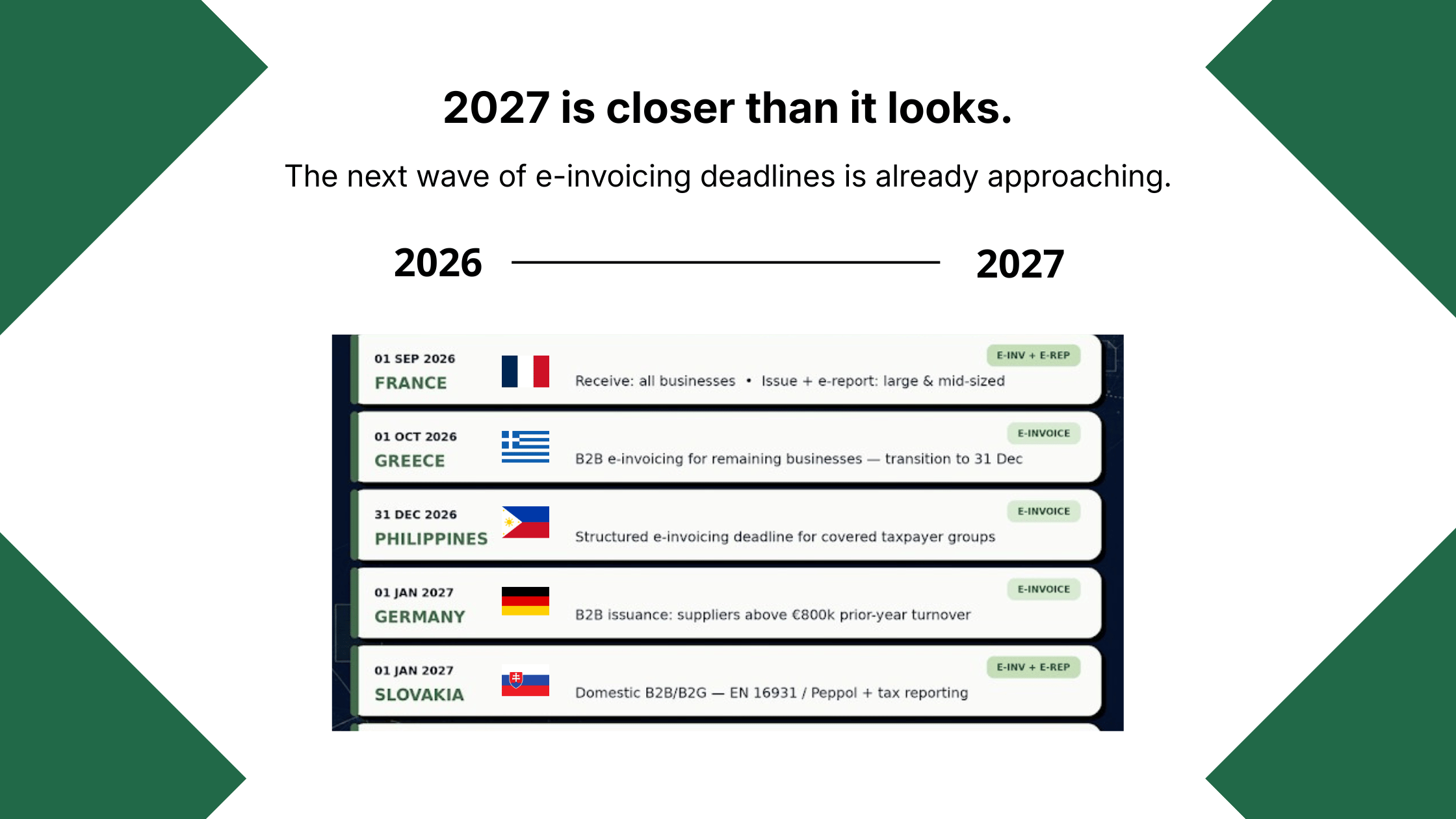
Across Europe, digitalisation is accelerating. You can read more about that here.
Large retailers, manufacturers, and public sector organisations continue to expand their use of structured electronic documents, while governments are introducing new e-invoicing requirements through initiatives such as ViDA.
For suppliers, this means EDI requests are likely to become more common - not less.
The question is no longer whether another customer will require electronic document exchange.
It's when.
Final thoughts
Every EDI mandate starts with one organisation making a strategic decision. But the impact reaches much further than that. It affects every supplier connected to that business.
Companies that wait until the requirement arrives often find themselves working against tight deadlines and competing priorities.
Those that prepare in advance can respond with confidence, onboard customers more quickly, and continue doing business without unnecessary disruption.
As supply chains become increasingly digital, being ready for EDI isn't just about meeting one customer's expectations - it's about preparing for the future of business.
Want to know more?
Talk to an EDI expert.


.png?width=2240&height=1260&name=Greeces%20e-invoicing%20deadline%20is%20closer%20than%20you%20think%20-%20blog%20post%20(1).png)