France isn't banning EDI. It's simply changing the language of electronic invoicing—and many businesses are about to discover their existing setup isn't enough.
For decades, EDIFACT has been one of the most widely used languages of electronic trade.
Millions of purchase orders, invoices, and shipping notices move between manufacturers, retailers, logistics providers, and suppliers every single day using EDIFACT messages. For many organisations, it's simply how business gets done. Which is why France's upcoming e-invoicing reform comes as a surprise to many.
If you've spent years exchanging invoices with French trading partners via EDIFACT, it's easy to assume you're already prepared for the next chapter of digital invoicing. In many cases, you're not.
Not because your EDI setup is wrong, but because France has decided that compliant electronic invoices must arrive in a different language.
This isn't an attack on EDIFACT
Let's get one thing out of the way.
France isn't declaring war on EDIFACT.
EDIFACT remains one of the world's most important EDI standards and will continue to power countless business processes across Europe and beyond.
Orders, despatch advice, inventory reports, and many other documents will continue to use EDIFACT for years to come.
The change applies specifically to electronic invoicing under France's new mandate.
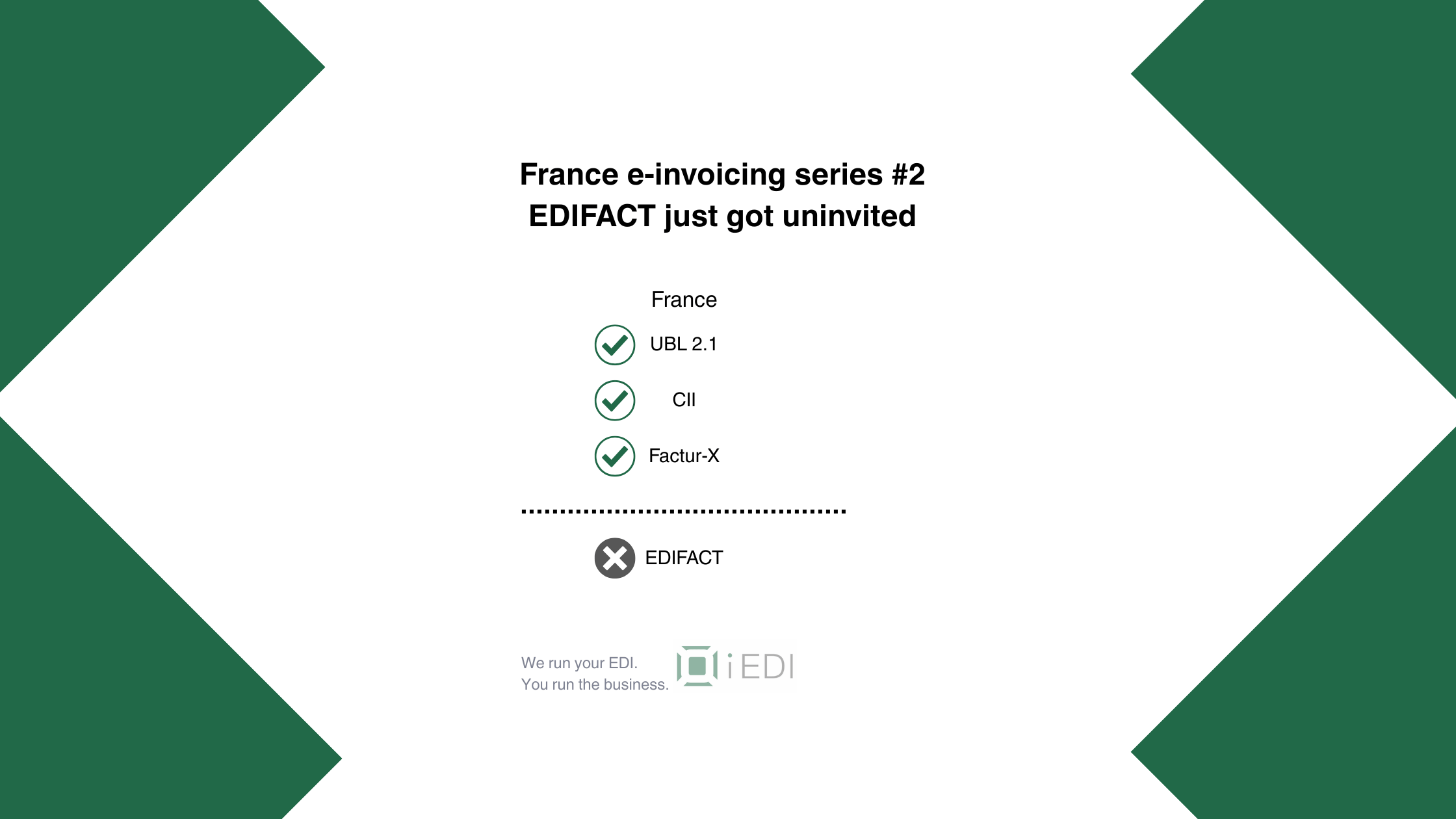
When invoices pass through France's certified e-invoicing ecosystem, they must comply with the formats defined by the reform.
Currently, those are:
- UBL 2.1
- UN/CEFACT Cross Industry Invoice (CII)
- Factur-X
If your invoice begins life as an EDIFACT INVOIC message, it can't simply continue unchanged through the French system.
Somewhere along the journey, it needs to become one of the accepted formats. That may sound like a technical detail. It isn't.
A translation is still a project
Many businesses hear "conversion" and imagine a relatively small technical adjustment.
Sometimes it is. Often it isn't.
An invoice is much more than a collection of numbers and addresses. It contains tax information, payment terms, references, item details, and mandatory data that must remain accurate throughout the exchange.
Moving that information from one structure to another requires careful mapping, testing, and validation.
It's less like changing the font on a document. It's more like translating a legal contract into another language.
Every sentence still needs to mean exactly the same thing.
Why this catches companies off guard
The biggest surprise isn't that France has introduced new formats.
It's that many companies assumed existing EDI automatically meant compliance, and that's an understandable assumption.
After all, if you've already invested in EDI, automated invoice exchange, and partner integrations, it feels logical to believe you're ahead of the curve. And in many respects, you are.
Your organisation already understands structured documents. You already exchange data electronically. You already benefit from automation.
But compliance isn't determined by how digital your business is. It's determined by whether your invoices can move through the framework France has established.
Those are two different questions.
The real challenge isn't the format
Ironically, the biggest challenge often isn't converting EDIFACT into another format. It's understanding where that conversion belongs.
Should your ERP produce UBL directly? Should your integration platform handle the translation? Should your service provider manage the transformation before documents reach the certified platform?
Different businesses will arrive at different answers depending on their architecture, trading partners, and existing investments. That's why this conversation shouldn't begin with technology.
It should begin with process.
Don't throw away what already works
One mistake would be to assume France's reform makes existing EDI investments obsolete. It doesn't.
If your organisation exchanges orders, despatch advice, and invoices with hundreds of trading partners through EDIFACT, replacing everything would make little business sense.
The smarter approach is usually to preserve what's already working while adapting the parts of the process affected by the new regulation.
Think of it less as replacing the plumbing and more as adding a new connection where it's needed.
Your existing infrastructure still has value. It simply needs to connect to a different destination.
This isn't just France
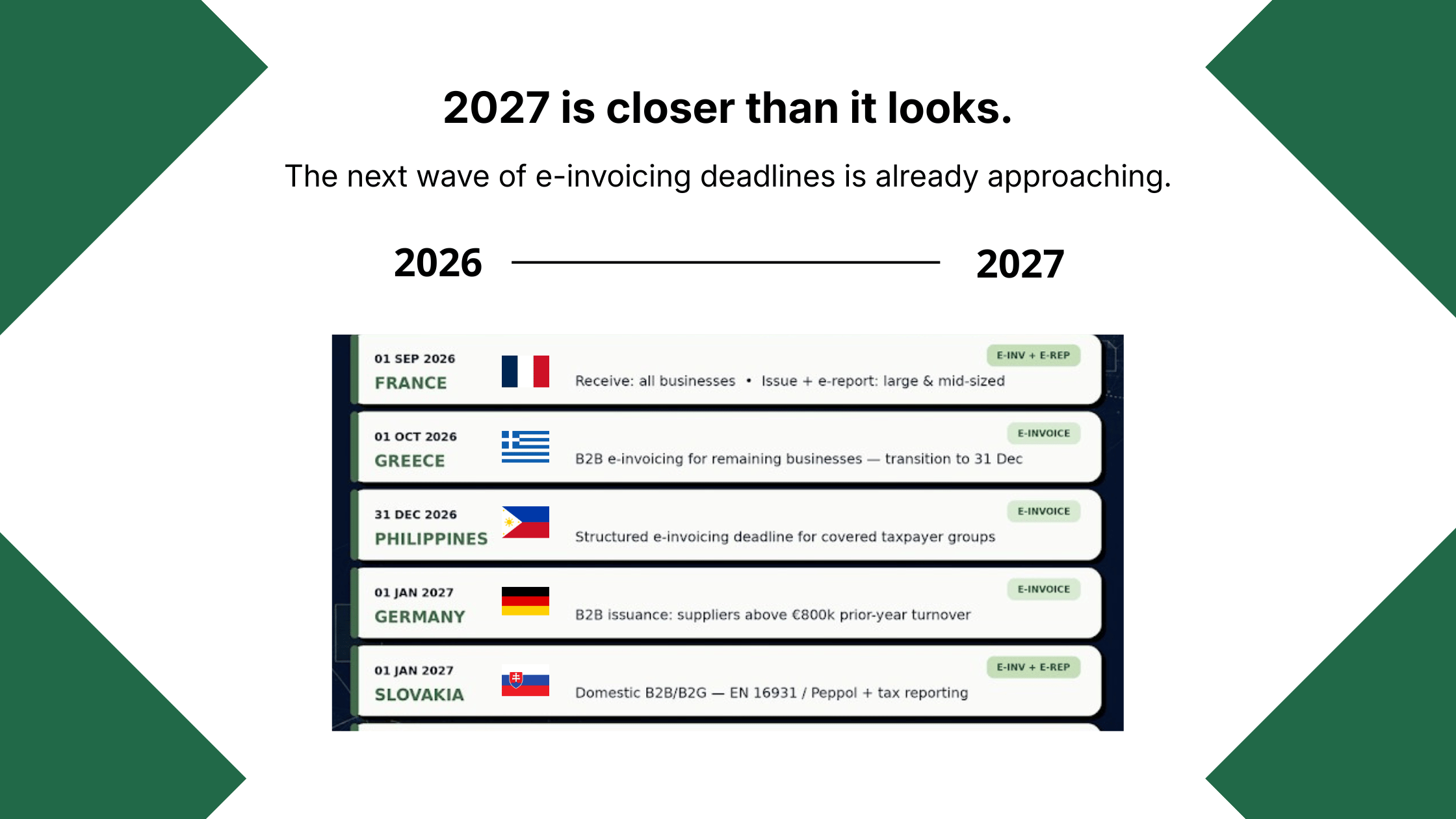
France may be making headlines today, but the broader trend extends across Europe.
Governments are increasingly defining how structured electronic invoices should be exchanged, validated, and reported.
Different countries are taking different approaches, but the direction is remarkably consistent. Standardisation is replacing fragmentation.
Businesses that build flexible document exchange processes today will be far better positioned as new requirements emerge elsewhere.
Final thoughts
The headline might suggest that EDIFACT has been shown the door.
That isn't really what's happening.
EDIFACT still has an important role to play in global trade.
What France has done is define a different set of rules for one specific part of that trade: compliant electronic invoicing.
For businesses already using EDIFACT, that doesn't necessarily mean starting over.
But it does mean understanding where your existing processes end—and where France's new framework begins.
Because in digital trade, speaking the right language has always mattered.
Now, it just matters a little more.


.png?width=2240&height=1260&name=Greeces%20e-invoicing%20deadline%20is%20closer%20than%20you%20think%20-%20blog%20post%20(1).png)